

Financial Literacy
Building Knowledge. Changing Mindsets. Creating Financial Stability.
Financial literacy is more than understanding numbers. It is about understanding your relationship with money and developing the knowledge, mindset, and habits needed to build a stronger financial future.
What We Cover
Financial Literacy Covers More Than You Think
True financial literacy combines knowledge, mindset, and practical skills. Kingdom Cornerstone's financial education addresses the full picture — from understanding your relationship with money to preparing for homeownership and long-term wealth building.
Understanding your relationship with money
Developing a positive money mindset
Understanding income and expenses
Creating a spending plan
Managing debt
Building savings
Establishing an emergency fund
Preparing for future goals
Understanding financial choices
Preparing for homeownership
Learning basic investment concepts
Understanding the role real estate can play in long-term wealth building
The Framework
Knowledge + Mindset + Action
Financial education becomes more powerful when knowledge is combined with a healthy money mindset and consistent action.
Knowledge
Understanding how money works — income, expenses, debt, savings, and the financial tools available to you.
Mindset
Developing a healthy, positive relationship with money that supports better decisions and long-term habits.
Action
Taking consistent, practical steps — creating a spending plan, building savings, and moving toward your goals.
Free Resources
Free Budgeting Resources & Tools
These tools are designed to help individuals and families improve their financial literacy, create a workable budget, track income and expenses, and progress toward financial stability. No account or registration required — just download and get started.
Kingdom Cornerstone Monthly Budget Template
Build a clearer picture of your finances.
Take control of your money with this spreadsheet. Organize your income and expenses, plan how to use your money, and compare your planned amounts with what you actually receive and spend. Includes common categories, customizable line items, and automatic calculations.
Best for:
- Adults and individuals managing their finances
- Households planning monthly spending
- Clients who want a more detailed budgeting tool
- Individuals working toward greater financial stability
Save your own copy and customize categories to fit your circumstances.
My First Monthly Budget
A simple starting point for managing your money.
New to budgeting? This beginner-friendly spreadsheet is designed for young adults, college students, and anyone learning to manage money independently. Track income, plan for everyday needs, and compare your planned spending with actual expenses.
Best for:
- High school graduates and young adults
- College and trade school students
- People starting their first job
- First-time budgeters
- Anyone who wants a simple budgeting tool
Save your own copy and customize categories to fit your circumstances.
Your Practical Budgeting Guide
Learn how to create, maintain, and improve your budget.
A budget is more than a spreadsheet — it is a plan for using your money intentionally. This guide provides step-by-step instructions for completing either budget template, tracking actual income and expenses, and conducting weekly money check-ins.
The guide includes:
- Instructions for completing a monthly budget
- A weekly money check-in checklist
- Budgeting strategies for all Money Forward stages
- Tips for irregular expenses and customizing categories
Recommended for anyone downloading a budget template, especially first-time budgeters.
Getting Started with Your Budget
Choose Your Template
Choose the Monthly Budget Template for a more detailed experience or My First Monthly Budget for a simpler introduction.
Download the Guide
Read the Budgeting Guide to understand how to complete your spreadsheet, plan income and expenses, and review your results.
Plan Your Month
Estimate expected income. List your expenses and decide how to use your available money. Prioritize housing, utilities, food, transportation, and essential bills.
Record Actual Amounts
Update the spreadsheet with income you actually receive and expenses you actually pay. Use receipts, bills, and bank records for accuracy.
Review and Adjust
Compare planned amounts with actual results. Identify what was higher or lower than expected and adjust your plan. A budget does not have to be perfect to be useful.
How Often Should I Update My Budget?
At the Beginning of Each Month
- Estimate your income
- Plan your spending
- Identify bill due dates
- Set realistic spending limits
- Include savings or debt payments when possible
At Least Once a Week
- Enter actual income and expenses
- Compare spending with your plan
- Check available account balances
- Review bills due before next payday
- Decide whether any adjustments are needed
At the End of Each Month
- Compare planned amounts with actual amounts
- Identify unexpected expenses
- Recognize your progress
- Identify one or two improvements for next month
Your Weekly Money Check-In
Set aside 10–15 minutes each week to update your actual income and expenses. Compare your spending with your plan, check upcoming bills, and decide whether you need to make adjustments. Small, regular check-ins can help you stay in control of your money.
People experiencing a financial crisis or difficulty covering essential expenses may benefit from checking their spending daily or recording transactions immediately.
Money Forward Framework
Your Financial Journey: Crisis to Thriving
Financial progress is not always linear. You may move between stages as your circumstances change. The goal is to identify practical next steps — not to compare yourself with others. Either budget template can be used at any stage.
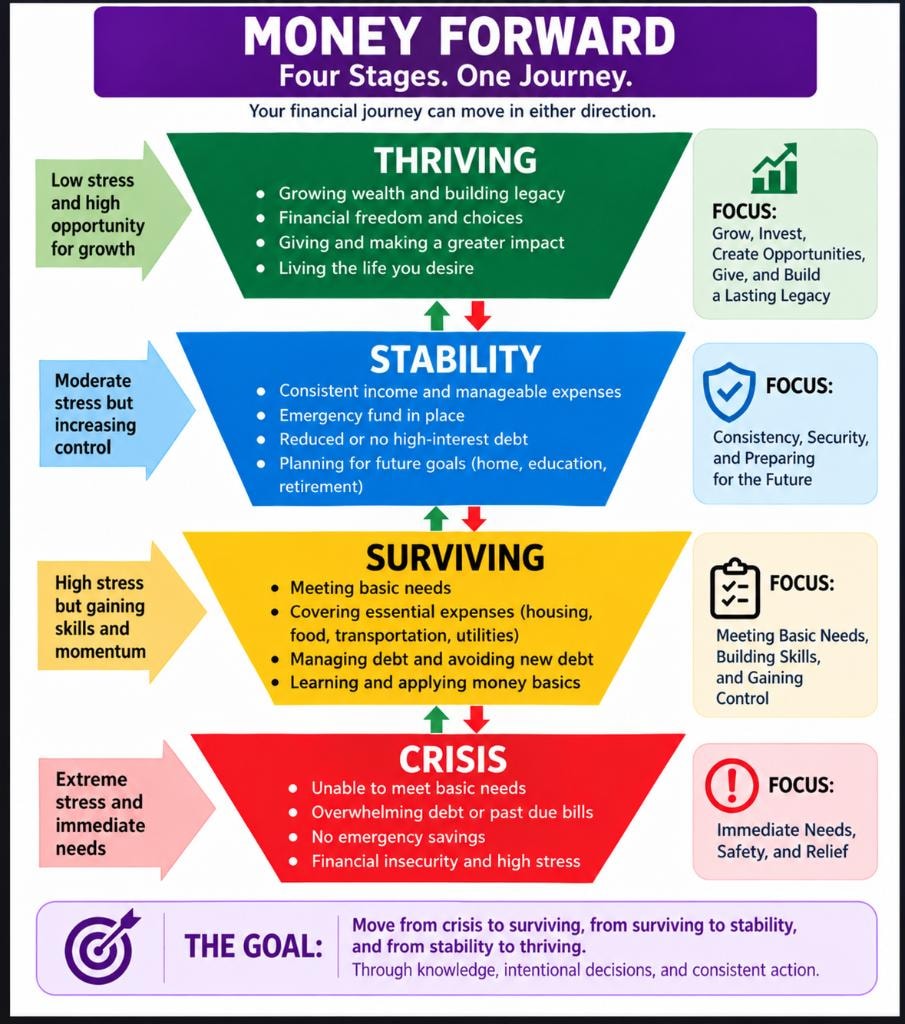
Focus: Immediate Needs, Safety, and Relief
The immediate priority is addressing essential needs, understanding available resources, and responding to urgent financial pressures. Housing, food, utilities, and essential bills come first.
Focus: Meeting Basic Needs, Building Skills, and Gaining Control
The priority is covering essential expenses, organizing income and expenses, creating a workable spending plan, and learning basic money-management skills.
Focus: Consistency, Security, and Preparing for the Future
The priority is developing consistent financial habits, managing expenses and debt, building an emergency fund, and preparing for future goals.
Focus: Grow, Invest, Create Opportunities, Give, and Build a Lasting Legacy
The priority is strengthening financial flexibility, pursuing appropriate wealth-building opportunities, planning for the future, and building a legacy.
Find Your Next Step
Understanding your financial situation is the first step toward making informed decisions. Explore practical tools and educational resources that can help you address immediate needs, strengthen your financial foundation, and prepare for future opportunities.
Start by understanding available income, prioritizing essential expenses, and identifying urgent financial needs.
Use a budget template to organize income, plan essential expenses, and monitor available cash.
Use the budget template and budgeting guide to strengthen financial routines, plan for irregular expenses, and work toward emergency savings.
Use budgeting and financial planning tools to organize longer-term goals, prepare for major purchases, and plan for wealth-building opportunities.
These are educational suggestions, not rigid requirements. Visitors may use any resource that fits their circumstances.
Five Habits for Better Money Management
Know your numbers
Understand how much money you receive and what you spend.
Give every dollar a purpose
Plan how you want to use your available income.
Check your budget regularly
A short weekly review can help you identify problems before they grow.
Prepare for irregular expenses
When possible, set aside money for car repairs, school supplies, annual fees, and gifts.
Adjust without giving up
If your circumstances change, update your plan. A budget should work for your life.
Need Help Creating Your Budget?
You do not have to figure everything out on your own. Kingdom Cornerstone LLC helps individuals and families understand their financial picture, develop practical spending plans, and identify their next steps toward financial stability.
Whether you are facing a financial crisis, learning to manage your money, building stability, or pursuing long-term financial goals, Kingdom Cornerstone can help you identify your next step.
Explore Classes & CoachingReady to Build Your Financial Foundation?
Explore the Surviving with Money program or reach out to learn how Kingdom Cornerstone can support your financial journey.